Leaderboard
-
Springer
Super User8Points282Posts -
FLEA
Supreme User6Points2,053Posts -
tac airlifter
Supreme User4Points2,052Posts -
M2
Administrator3Points6,081Posts



Popular Content
Showing content with the highest reputation on 04/05/2020 in all areas
-
4 points
-
4 pointsThe Crozier situation has sparked many illuminating conversations up and down the chain. No, we don’t know all details but the core issues ring true to anyone who has experienced mid-level authority in the military: line commander lacks ability to decisively solve a time-sensitive crisis, and explores unconventional options to address inadequate senior leadership. Most people who run into these experiences never pass from “explore” into “execute” phase; they stop upon realizing the cost of a solution doesn’t match the gravity of their situation. Crozier was experiencing something unprecedented in our times; who here can know how they would handle it? My personal thoughts: I’d rather work for people like Crozier than the people who fired him. And I’d rather be an O6 fired for helping his troops than an O10 protecting the system. Our greatest military resource is our people; not our machines and not our OPSEC.4 points
-
3 pointsI think there is more to the story but the fact that his immediate boss is on the boat with him leads me to believe that he was not getting the support he needed. At the end of the day though I think the smudge is still on the Navy's face. This dude was cheered off his boat and in the realm of public opinion he is a hero. He will find plenty of post retirement oppurtunities. But the common sentiment amongst Navy sailors now is that their service doesn't have their back, and that weighs on their morale and retention.3 points
-
2 pointsSo, what's the over-under on when all Summer PCS moves are canceled? Slight disagreement with Bashi...shit's already retarded2 points
-
2 points
-
2 points
-
2 pointsIf noone has told you, if able, make sure you get 50 points during this year while you wait to go to training. I understand that this may not be possible with the current situation. You get 15 points for just being a member of the ANG and you get an additional point for ever pay card you turn in. The 50 points are based on your enlistment year, not fiscal year or calendar year. If you don't get 50 points, that year won't count as a "good" year toward your 20 years for retirement.2 points
-
2 pointsGlad to see another Ron Fogleman fan and totally agree as being one of the best. He brought back "Crud" to the Polly bar when he became the Division CC at DM in '85.2 points
-
2 pointsOrganize your drop sheet based on what you feel you would enjoy doing the most after UPT. Trying to play the system or plan for beyond your first ops assignment is pointless and won’t end well. By the time you qualify for any of the weird, non standard assignments they may no longer be a thing, your life will have changed, you may no longer desire to apply for them. As much as I’m sure you and all your buddies in UPT feel you can stick it out for the long game, you will not be okay doing something you don’t enjoy for years, no matter how much you feel you could.2 points
-
2 pointsHow does the Air Force chain of command handle it when lower ranks elevate issues, ask for changes that involves a small amount of risk in judgement? Dodge, Delay, Deny, Defend, and Punt. Does anyone think Crozier's first attempt at getting resolution was a blast unsecure email?2 points
-
2 pointsSure, no one knows everything that happened, but I would say based off the summation of my experiences, there is a strong enough possibility that the chain of command needed to/deserved to be embarrassed that I am willing to give the Captain the benefit of the doubt on this one. We live in an era of totally inept military leadership and in all likelihood his superiors were probably ready to sacrifice the crew to the pyre of readiness for a cause that quite honestly isn't matriculating. We have to remember our adversaries are impacted by these events as much as we are and its unlikely China or Russia step up and say "oh man! ONE WHOLE aircraft carrier is down for 2 weeks, I'm going to launch my invasion of Taiwan!" I think we also tend to overstate the firepower a carrier even brings to a major operation. Its not that its insignificant but a fixed air base can certainly generate substantially more.2 points
-
2 pointsI had an '88 RV-4 for 20 years and was always tinkering. Purchased a 2010 RV-8 5 years ago and it has been pretty much gas and go. Newer RV's seem to be set up better. Define your mission. RV's are not as solid as a spam can. Flew mine MN---> AZ in one day and I was still vibrating when I went to bed but would never trade it. My -8 is the last plane I will ever fly.
 2 points
 -
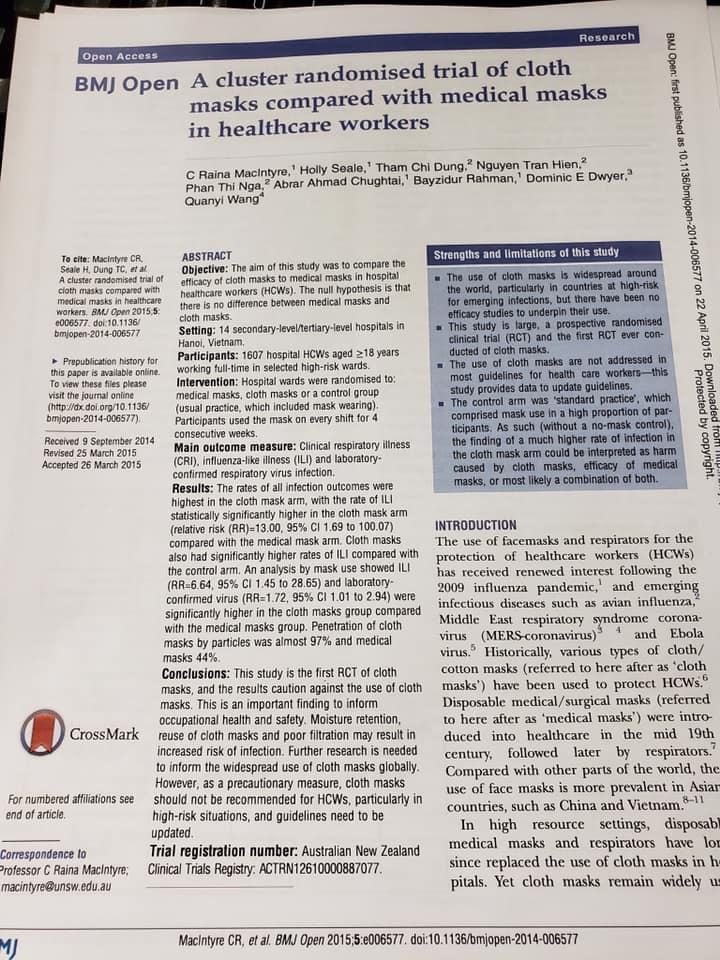
1 pointHere's my go-to COVID-69 mask - it's cheap, works, and manufactured in massive quantities in the PRC/USA. I expect we will see the stockpile vanish in short order, similar to the recent run/hoarding of toilet paper:<)1 point
-
1 point
-
1 pointhttps://www.nytimes.com/2020/04/05/magazine/navy-captain-crozier-positive-coronavirus.html1 point
-
1 point
-
1 pointIt's not like it was a unilateral decision. It was a scheduled port call. And again, his immediate boss was on the ship. Does anyone think his boss said "don't stop in Vietnam" and he did it anyway? Edit to add: at the time they disembarked the ship in Vietnam, the country had fewer than ten cases total. It was before the travel ban from China. It was before Italy had their first case. It wasn't the height of the epidemic.1 point
-
1 point
-
1 pointCheckout "1" on amazon prime or netflix. Almost a remake of "The Formula 1 Drivers: aka The Quick and The Dead" Both good1 point
-
1 pointWhat he said, we're not special and everyone across the globe is dealing with the same shit sandwich in any industry or group you could think of. Take a breath, buy some nice bourbon, and maybe learn Spanish or something.1 point
-
Commissioned service according to you, you are only at shy of 12 years. Good for another 8 brah. Serve.1 point
-
1 point
-
1 pointBottom line, the answer to your question doesn't matter and is impossible to answer since the future of the U-2 will more than likely change between now and then. When you are able to apply, they will either be hiring or they won't... simple as that. As Hawk15 alludes to, go enjoy your first MWS as much as you can... and let the chips fall where they may if/when you decide to apply to the Dragonlady. In previous years when we were "a dying airframe", we never slowed hiring. A lot can happen between now and 2025, and only time will tell1 point
-
1 pointNo, no, no......it’s the “FIVE Ds”: Dodge, Duck, Dip, Dive, & Dodge.1 point
-
1 pointA few reasons: 1) The cost to build a modern experimental doesn't pencil out on a resale basis compared to the fully discounted acquisition price of a 40+ year old legacy spam can 4/6 seater. Which is why I was so hot after the primary non-commercial category (and of course the FAA snuffed it). RV-10s on a resale basis make no sense compared to a used up SR-22, Saratoga SP or F33C. Granted, I'd take the RV-10 any day based on the maintenance and parts allowances alone.... but not for housing money, which is where both the RV-10 and the SR-22/Toga/F33C live. Builders are of course, generally insensitive to that argument. I personally don't like that litmus test, which is why I have a bone to pick with the 51% rule, but that's for another day. In a perfect world (and that's where MOSAIC comes into play), EAB resale owners would have the legal ability to inspect their personally-owned experimental in the same way they are allowed to do so with a repairman-inspection certificate in the E-LSA realm. But that's a tangent, it still doesn't address the acquisition price non-starter between the few 4-seaters in EXAB land and old certified 4 seaters. As much as I detest the certified rules, and have my seasonal bouts with wanting to chuck the thing, the reality is that I'm orders of magnitude of money ahead with the spam can on a total yearly outlay than attempting to capitalize an RV-10. Not even close. That's unfortunately the way the cookie crumbles in my world where cost is an object. It is what it is. It is certainly no small part of why the hobby is dying with the younger generation, and I digress. 1a) To be clear, the cost delta to assemble a 4 seater and a 2-seater fixed gear airplane is trivial. The engine choice cost is also trivial. Yes a 4-seater would call for a bigger engine to be competitive, but a Lycoming 540 is no more expensive to overhaul in its parallel valve variant than a Lyco 360 of angle valve variant. Hell, a 540 is cheaper to overhaul than a Lyco 390, with insanely priced jugs. BL, it's not a materials or engine cost. It's merely a CAPEX one because of the prevailing depreciated price of certified 4-seaters. 1b) Very few builders are interested in assembling the equivalent of an experimental grumman Tiger (essentially a 4-seater RV, aka putting a 4 banger on and RV-10 and making it a 3-seater like all sub-200hp certified 4-seaters are and why they're priced the way they are). Nobody in builder land does that, which is why there's no affordable 4-seaters in EAB. The only other options are oddball Velocities with T-38 runway requirements, equally horrid high DA performance specs and family unfriendly cabin volumetrics, or hen's teeth fiberglass constructed offerings in the orphan "plans-built" market I wouldn't strap in on if the choices were that or get COVID-19. 2) Demographics. Good bad or indifferent, the preponderance of the experimental market is empty nester boomers, or childless couples. The heads of household who do partake do so where the decision was made the spouse was not interested in flying, or there was never going to be a willingness to travel with the children. As such, the market essentially settled on 2-seaters, for those without the aptitude, inclination and/or time to build in order to escape certified hell. See 1b for the feedback loop of why demographics feed the outcome of the offerings. Everybody else with flying-friendly families is stuck in certified land, myself included. Conversely, the few heads of household with young children have no interest in building outright as a function of life stage financials and time, which makes it a catch-22. That's a good initial crack as to why there's no affordable options for 4-seaters. The current trend in certified is the loss of airframe OEM support until it becomes uneconomical to maintain. I won't mention specific make/models as that just triggers the type cults. The fixed gear trainer-lineage airplanes like C1xx and non-retract PA-28s will endure for a long time because of the sheer number of salvage samples and active flight training market that still enjoys 3rd party vendor support. But the antiquey retracts and twins are in a world of hurt already, and maintaining them under certified rules going forward will continue to be an exercise in watching a terminal patient decay without having someone mercy kill it already. To each their own on that. It's always been a lone-wolf hobby in practice, and current rules don't help the cause. I have my theory as to why the FAA doesn't want to release certified cans into primary non-commercial, but that's my conspiracy theory and for another thread.1 point
-
1 pointCurious as to why the firing went all the way to acting SECNAV. There's a slew of military chain of command (you know, the one Crozier was relieved for ignoring) admirals who could've done the deed. Why did this go up to a temporary political appointee?1 point
-
1 pointIt was an odd move by Modly, something many of us weren't expecting. Modly does make several points, but so does Crozier and as I've said the latter had other options to address the issues. If and when we ever learn the truth, which I doubt we will, we'll know who was indeed correct in their actions. It all goes back to what you are willing to fall on your sword for, and is it worth it. Ronald Fogleman did so primarily for Terry Schwalier (although his handling of the Kelly Flinn case pissed off some politicians as well) and while he did set an unprecedented precedent in the USAF in terms of holding personnel to higher standards, that seems to have gotten forgotten over time. Fogleman remains one of the two best CSAFs during my 25 year career (JJ Jumper being the other), and I still have great respect for the man; but such nobility is almost wasted on many of the civilian leadership of this nation. If Crozier was attempting to do the same, than good on him; but I for one am not 100% sure what his objective was with this move nor do I feel it puts him in the same boat (pun intended) with the man his ship was named after. Maybe TR's actions in 1898 are what prompted Crozier to try the same, but these are different times and as he learned the tough way, different leadership.1 point
-
1 pointI've flown with a few guys who have deposits down on the Raptor. The numbers they were quoting seemed a bit of a pipe dream, but who knows. I hope it works the numbers actually happen. I heavily researched the idea of buying a Bonanza/Mooney or similar. Hindsight is right, you'll run into some serious personalities, and experimental is the way to go to save costs. All I can say is be honest with yourself on what your "mission" is and how often you'll actually use it. After joining a club with a Cherokee-6, I found I didn't use it nearly as much as I thought I would. If it wasn't bad weather, it was personal scheduling conflicts, rarely was it because of aircraft availability. This drives up the cost/hr significantly. As someone who was a CFII before UPT, and once very proficient in small plane IMC ops, I realize I will not fly nearly enough to be comfortable in single pilot IMC ops in a light GA aircraft. I also looked at fractional ownership with a few squadron mates and let's just say, do LOTS of research and soul searching if you go that route...especially if you're particular about your stuff. Tons of good information out there about doing this, so study up and know the pitfalls. I found the type specific forums (beechtalk, mooneyspace, etc...) to be the most informative places to hang out. In the end, I went to the opposite end of the spectrum and now fly around at 500 feet, 85mph, radio off (out of the pattern), door open in a tailwheel aircraft and couldn't be happier. I fly it WAY more than most fly their BO's/Mooneys and it's ridiculously cheap flying. I may not fly more hours, but I'm probably flying more often. If you have a good airport community, half the fun is just being out there and hanging out. Plus, you get to know people who may let you fly their planes lol. If I ever decide I want something with some speed, I'm likely getting an RV-7.1 point
-
1 pointEveryone here is freaking out about shit you can’t control! Yes shit will be delay, you won’t graduate on time and you will miss that deadline you had to make it to xyz airline. One thing I know for sure now that I am in is that the needs of the Air Force wont change. We still need pilots. We still need manning! I see it every day where I am at. Both fighters and heavies. So relax and work on those packages. Interviews will happen maybe not right away but they will happen. I just finished interviewing a guy via Skype! So relax! Shit will be rolling! Trust me we need you!1 point
-
1 pointYup, non-airline employers wipe their rear with USERRA. I went through that fork 12 years ago, and chose the full time route in the Reserves. Never looked back. I have a plethora of co-workers and acquaintances with similar experience. It's not worth the trouble to me, considering I don't want to work for someone I have to sue in order to work for in the first place. The fact is that aircrew jobs in the ARC are designed to be compatible with large-department employers like the airlines, where you're one of thousands and won't generally be missed while pursuing mil duty. Small employers are anathema to aircrew work imo. What sucks for you is the waiting due to covid et al. When I was in your shoes I was fortunate to go from my crappy broke graduate school existence right into OTS and a steady paycheck. Though I troughed through a portion of the Lost Decade, I generally haven't gone without a paycheck thanks to the military. I owe my ability to start a family on this job, and look with pride back at the time where I chose to stop tilting at the windmills and vacate the pedestrian job market for full time reserves. No one size fits all answer for sure, but for me it wasn't worth the trouble getting on the userra crusade in calvinist right-to-get-fired America. I'm in a much better financial and career position by focusing on being an full time AF pilot. Good luck to ya.1 point
-
1 pointhttps://www.stripes.com/news/europe/this-is-discrimination-germany-seeks-income-taxes-from-us-airman-because-he-s-married-to-local-woman-1.624553 The fact that his command isn't aggressively jumping in to protect him is really dissapointing to me. Having been stationed in Germany, I don't feel like the German government strongly appreciates our presence and we'd be better off moving our larger bases and hubs to Poland.1 point
-
1 point
-
1 pointThat’s Army 101, sorry “joint 101.” Inability to comprehend the idea of desired effect vs. emotional attachment to a specific platform/MDS/weapon.1 point
-
0 points