
Leaderboard
-
ClearedHot
Administrator14Points5,296Posts -
kaputt
Supreme User5Points518Posts -
Sua Sponte
Supreme User3Points1,740Posts -
Prozac
Supreme User3Points1,714Posts


Popular Content
Showing content with the highest reputation on 03/31/2021 in all areas
-
8 points
-
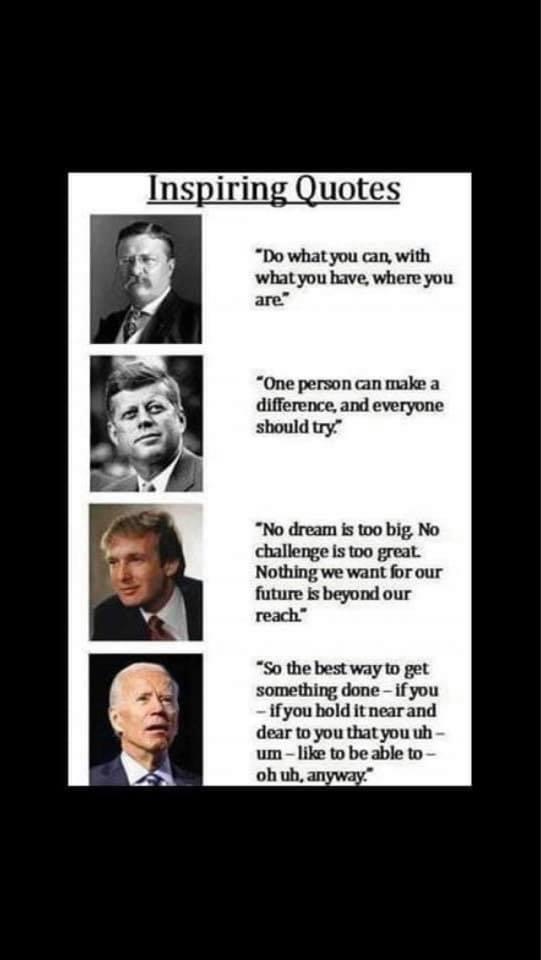
5 pointsYou mean Martin Luther King’s actual dream? It honestly an embarrassment to his legacy where we are as a country right now with this whole social justice quest.5 points
-
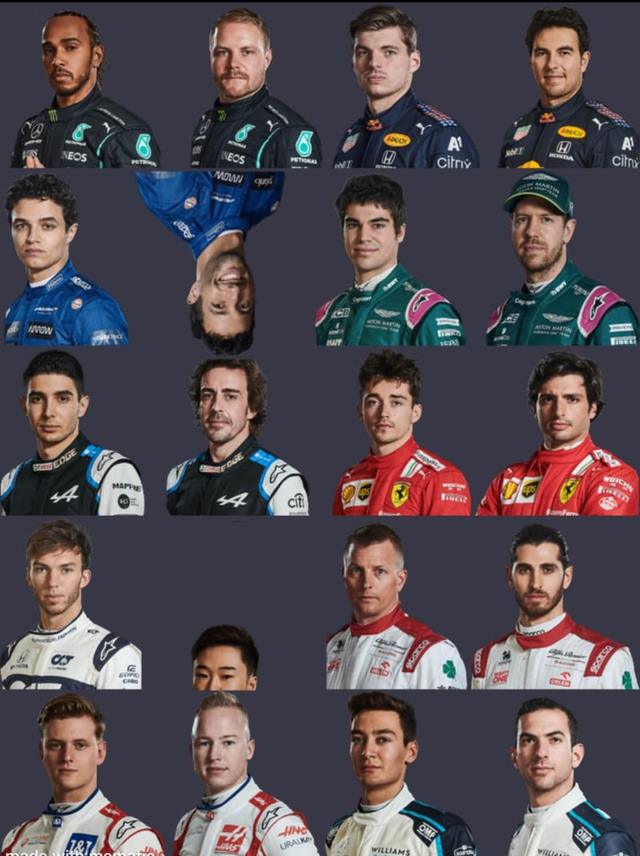
3 pointsAgree with the great race sentiment. Really wanted Verstappen to pass Hamilton those last few laps. Have to hand it to Lewis though. As “boring” as it is to have the same guy win all the time, the man is a machine. That was a masterful piece of defensive driving.3 points
-
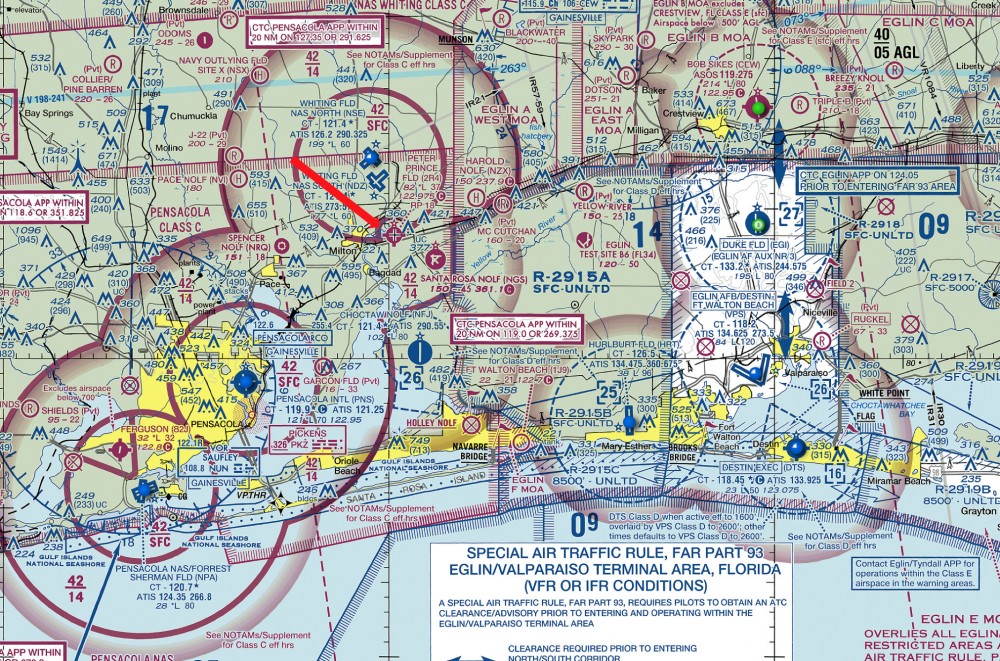
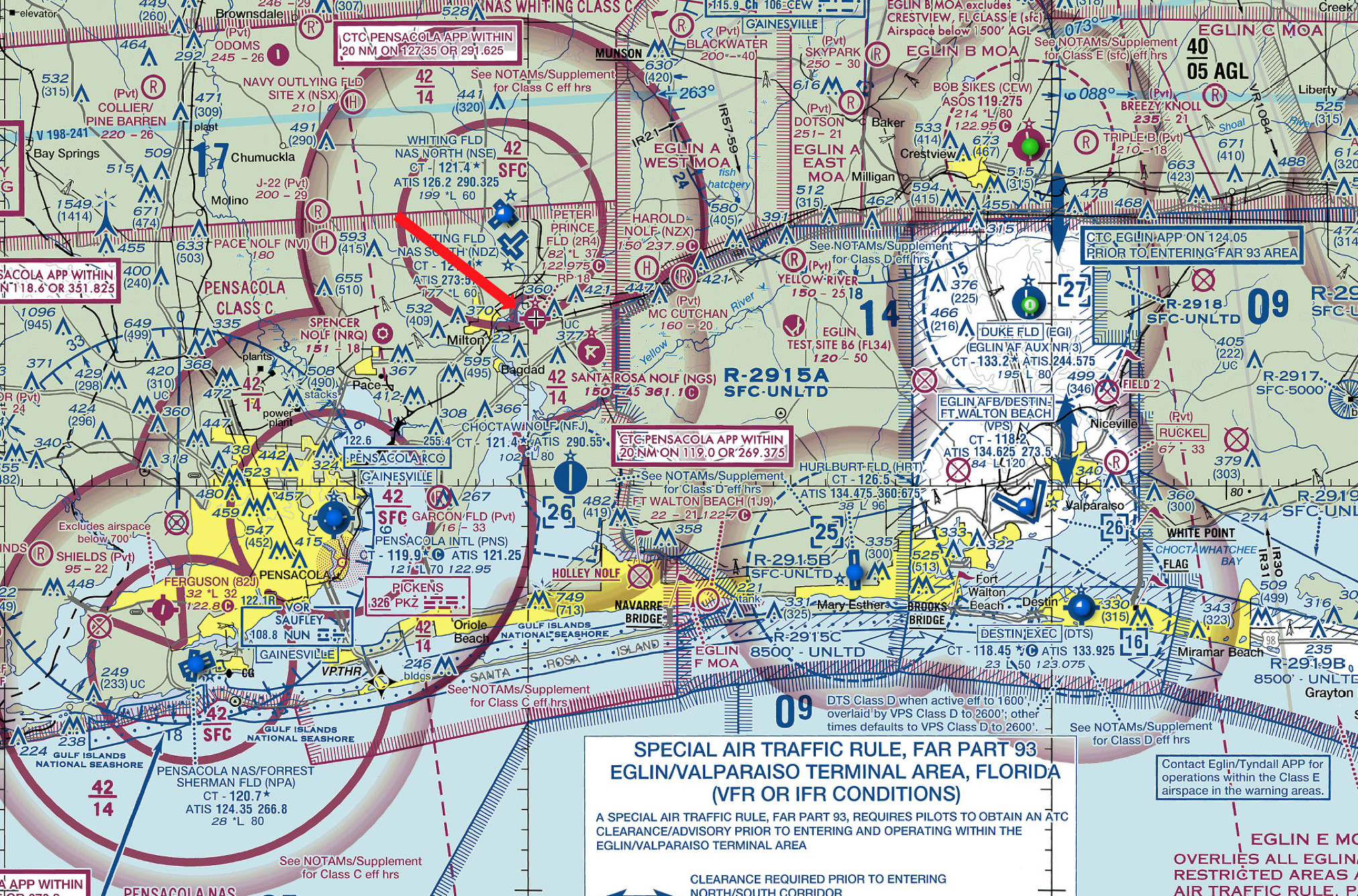
3 points3 points2 points2 points2 pointsMaybe when it comes to combat capability we as a country can just not look at sex or ethnicity (whatever the hell that means these days) and try a meritocracy. Which would mean just eliminating both from any application. You're not doing anyone any favors if someone gets into a position they shouldn't be in due to race or sex.2 points1 pointThis. I am guessing that the flow of rubles into the team is also stifling Steiner's style to unfcuking Marzipan's attitude. Hard to rip someone a new one when A) a phone call to Dad = no job as team principal and B) the two giant bald guys in dark suits, sunglasses, and suspicious lumps under their jackets are always present when kiddo is around...1 point1 point1 point1 pointDifference is Marzipan did it literally twice in like 5 corners. His last lap of Q1, he passes 5 cars on the outlap (poor form to begin with) and spins, ruining their qualifying laps. Then lap one of the race he makes it 3-4 corners and spins again. The guy shouldn't be in F1. The guy punched another driver twice for getting in his way on a Free Practice 2 lap. He doesn't deserve the seat. Strolls dad might have paid is way, but at least he has pace and isn't a punk. Sent from my SM-N975U using Baseops Network mobile app1 point1 pointI've seen that in numerous places this past year. If you want to see some unique procedures check out my home airport 2R4. Airspace issues galore (right hand patterns required on 18, left hand on 36, non-standard 900' pattern thanks to Navy airspace to the north), and military bases all around...all done via CTAF.
 1 point1 pointAnd the press just glazed over it like because they have been Jedi Mind Fucked buy the DNC. Journalism is dead in this country.1 pointYou're right in those three points, I'm not arguing the top level characteristics, and my post came off that way. The paper looked at how to measure the those characteristics. Cognitive ability was easy to measure and quantify objectively. Motivation and emotional stability were harder to measure and quantify objectively. Sure, there are traits that likely are likely important (how you handle stress and anxiety, being goal seeking/achievement driven), but outside of that, it gets fuzzy, and that's the point I was trying to make. The paper also points out another issue: what is the definition of successful? Is it completing UPT? Is it being promoted to O-6 and beyond? Is it some tactical measure? Selection criteria) emphasis could change as you shift focus between different goals, even though the AF needs all 3 goals met for different reasons. I'll still argue that PPL doesn't (directly) matter, mainly because the flying time is still captured in the PCSM (which does predict performance in UPT). I'd be for PPL weighing into PCSM as a negative factor: have 80+ hours but no PPL? Maybe your flight hours should weigh less in your PCSM score since you're taking more time than average to obtain the PPL. Also, should a PPL weigh more than a sport pilot license or recreational pilot license? Should more weight be given to instrument rating, or commercial pilot/ATP? I guess what I'm getting at is that the PPL shouldn't just be a box check to show motivation. Otherwise, it's like having a box for the major promotion board for a master's degree: completing an AAD shows motivation, drive, and commitment, as well as increased knowledge, but is costly in terms of money and time. Having a masters degree *is* valuable to AF, but with the pace of deployments in the post 9/11 world, and doing more with less as we took cuts to personnel, the AF couldn't afford to keep the master's "requirement" at the O-4/O-5 level without impacting retention, so it got masked until the O-6 board (which shows that it's still valued). Not to mention the cottage industry that popped up happy to take government tuition assistance money to provide a not very meaningful check the box degree, undercutting why a master's was valuable in the first place. There were outside forces restricting women from competing, regardless of their ability. - By AF policy, females were not allowed to fly combat aircraft until 1993 - Women tend to be smaller than men, and many women just don't meet anthro standards (have to be above average in height/sitting height/reach/etc) -- Medical waivers, including anthro waivers, used to be less much less prevalent -- Most fighter aircraft were designed to fit the AF pilot population in the 60s (F-15, F-16) through 80s (F-22). Which again, was only male during that time period -- The AF did not mandate requirements for anthro considerations in aircraft design accommodate women until 2020 (and to use more than just the historical population of AF female pilots, who again, were above average in height compared to the general population of women in the US). So like men, women had to be above average not only in mental and cognitive abilities to compete to be a pilot. However, women also had to be above average in physical size as compared to other women because airplanes were designed to accommodate men due to legacy policies, which significantly shrinks the pool of women eligible to compete in the first place. Here you and I agree. Don't think subpopulations (like pilots, or a subset of pilots like fighter pilots) have to match the greater US population distribution. But I do believe we should remove any barriers to entry that don't contribute to combat effectiveness. Some of the issues go beyond the AF's scope, like K-12 education. That being said, the better education (particularly STEM, but I think physical education/fitness is also important and has fallen off to the wayside) that is provided across the board (rich/poor, majority/minority) increases the pool of people to select from for officer candidates, which increases the pool for pilot candidates. But that's a discussion for another day in another thread. One other topic that might be interesting to look at is how personalities/attributes in different jets changed when we moved to an track select system, where fighter/bomber studs were identified much earlier in UPT than in a single track system.1 point1 pointNew member here. Started in a PA-28 for PPL, switched schools and finished in a C-172N. Currently own a PA-32-300 with my brother and dad. We're looking to upgrade to a twin eventually but just dropped some coin on autopilot, Garmin glass panel, and some other upgrades so it might be a while. She's not as fast as a Mooney or high-profile as a Cirrus but she can definitely haul some weight.
 1 pointInteresting. In the early 2000s IFT was a “go to the FBO and get a PPL on Uncle Sam’s dime” program. It was great. And had zero influence on my ability to fly the Tweet upside down or in fingertip.1 pointThat makes sense. However that’s in line with Tucker’s opinion (although his presentation was caustic). He criticized GOs by name who champion efforts to prioritize diversity at the expense of lethality. So I was confused why you were critical of Tucker while also agreeing with the meat of his point. It’s challenging to isolate ideas for discussion from the personalities & styles which present those ideas.1 point1 pointI’d agree with this. When I went to UPT IFT was a PPL. Making a PPL part of the selection does limit the type of person that is competitive for a UPT slot. Kind of like you need to have a rich mom and dad to get onto the sailing team at Stanford.1 pointNotice the operative verb used over and over was feel, I felt this I felt that. He had no specific instances of racial discrimination, intimidation or reprisal to cite. He referenced his feedback received at different moments in his career and his interpretation of them as more evidence than the AF and the people in it in his community were aligned mostly against him based on his race, but he moved up. If the institution / some of the people in it are so bad/racist/unfair, how the hell did he get where he is in the AF? When you look around you think everyone or most are X derogatory thing, maybe you are the problem and not the institution / people in it... IDK, more context is necessary here but at first blanch he seems like a high performing type A who made it into a community of other high performing type A's and like every operational community, it has only so many upper level slots / prestigious vertical upward paths, not all will make it thru their filters. Like him, I have zero evidence to reference beyond my hunch but 40 something years of life and 20 years in the AF lend me to this suspicion.1 pointWhat's a PPL run these days? $15K? Plus the free time to fly and study? In addition to participating in organized athletics (which also involves time and cost). That's a huge hurdle to overcome to increase your chances, especially if you're trying to remain competitive in other selection factors (grades, athletics, community service). That being said, the AF is trying to help bring more people who may not be able to afford a PPL into the selection pool (including minorities/women) with scholarships for PPLs: https://www.airuniversity.af.edu/Holm-Center/AFJROTC/Flight-Academy/ Plus, generally UPT studs who have (only) a PPL are generally indistinguishable from those who don't by the end of the first T-6 contact checkride. My hunch is that having a PPL decreases your odds of washing out (initial solo is one of the big milestones), mainly because having previous flying experience makes the learning early on a bit easier on average and making that individual a safer investment for the AF. One problem in modeling (like figuring out who to select for UPT) is once you identify a maximum in the model (like maximizing UPT graduation rate based on selection factors), the question becomes "is that a local maximum, or absolute maximum." In other words, just because I find a peak in the model, doesn't mean I've necessarily found the best solution in the solution space. You may also have potentially competing goals (minimizing UPT washout vs producing the most skilled pilots). Maybe selecting athletes produces a handful of "great" tactical pilots, but if there's a higher washout rate, is it worth the cost? Or is it better to select to minimize washout rates and accept "average" or "acceptable" pilots (if the minimums weren't good enough, they'd be higher...)? For better or for worse, pilots run the AF. If we select pilots to only focus on being the best tactically, it hurts our ability to groom operational and strategic level planners with tactical experience (unless the AF were to allow non-pilots to fill those higher level roles). At the same time, focusing solely on the operational and strategic levels may leave us unable to win at the tactical level to achieve those operational/strategic goals. So we need a mix of pilots with different skills, backgrounds, and career desires. And since the AF is run by pilots, it acts as the greatest filter into who is allowed to lead within the AF, so it gets a lot of scrutiny.1 pointSo, there's an effort to remove a PPL from consideration for selection? Seems stupid. I didn't get a slot in college (selection rate went to shit), so I competed for a slot on AD. I knew a PPL was going to be huge, so I figured it out. If I can find a way to get for a PPL, anyone can. I just looked it up, but back in 95 a 2nd Lt made $1636.20 a month. BAH barely covered apt rent. I found a local flight school and paid for my PPL, $2250 at the time, by nearly maxing out a credit card. I paid what I could each month. I then bought a block of 50 hrs for $1250 (yes, $25/hr wet, a huge bargain these days, but in a Traumahawk) and got my hours up over a 100 (the next big PCSM milestone). Lastly, in my UPT class, we didn't do FSP as it was cancelled a few months before attending and the AF didn't fire up the paid for PPL program yet. A few folks that didn't have a PPL struggled. Some made it, some didn't. But maybe that's the problem here; people can't figure shit out anymore and need systems to change and make it easier for them. Compare two people for a slot. One is just existing, but doing good school. The other is busting their ass, working extra to pay for a PPL. It's not that hard of a call.1 point1 point1 point1 pointThis is just another opportunity to put drama in front of the public (in the flavor of the day). It received attention, and the Daily Mail profited from the story - mission accomplished. Could they have found five Caucasian guys with the same (or close story), and get them to whine? Quite probably. But it's not the flavor of the day, and the media can't profit from it, so we don't hear about it.1 pointI'd be interested to hear from anyone here who knows more about the situation with this guy. My initial read is that something is a little fishy here. How does a supposedly shit hot raptor pilot/Harvard grad land himself as a line IP at the Randolph IFF squadron doing some innovation ball wash for AETC.. Is it because the organization with POC as the secdef, csaf, and cmsaf is viciously racist? Or is it because he pissed the wrong person off or was a douche in his community and was put out to pasture like so many other iron majors before him? Sorry dude, I know it hurts. But it's happened to white dudes too. In fact.. almost exclusively white dudes.1 pointMy $0.02 Get back to one primary trainer and one advanced trainer. The argument over CRM being critical to teach for half a year in the heavy track is crazy IMO. Learning CRM should take about a week in the FTU, even if the guy is trained in a T-38/T-7. It’s not hard to ask someone else to do stuff for you. I realize I’m being flippant, but CRM is not some highly challenging concept.1 pointExactly. Just in case I don't perform the Four Engine Flameout Boldface in time, I want the wife and baby(on the way) to have sufficient funds to live on. Never underestimate how much you need or may need in the future. I have no problem paying the yearly premium, it means I made it through another year! For the younger and single dudes, it may seem like a waste of money, but I would look into getting a policy asap. You can save some serious coin by locking in when you are young. You never know when a health problem might make you ineligible for coverage. My 6.9 cents, FWIW.1 point










Account
Navigation
Search
Configure browser push notifications
Chrome (Android)
- Tap the lock icon next to the address bar.
- Tap Permissions → Notifications.
- Adjust your preference.
Chrome (Desktop)
- Click the padlock icon in the address bar.
- Select Site settings.
- Find Notifications and adjust your preference.
Safari (iOS 16.4+)
- Ensure the site is installed via Add to Home Screen.
- Open Settings App → Notifications.
- Find your app name and adjust your preference.
Safari (macOS)
- Go to Safari → Preferences.
- Click the Websites tab.
- Select Notifications in the sidebar.
- Find this website and adjust your preference.
Edge (Android)
- Tap the lock icon next to the address bar.
- Tap Permissions.
- Find Notifications and adjust your preference.
Edge (Desktop)
- Click the padlock icon in the address bar.
- Click Permissions for this site.
- Find Notifications and adjust your preference.
Firefox (Android)
- Go to Settings → Site permissions.
- Tap Notifications.
- Find this site in the list and adjust your preference.
Firefox (Desktop)
- Open Firefox Settings.
- Search for Notifications.
- Find this site in the list and adjust your preference.