
Leaderboard
-
kaputt
Supreme User5Points518Posts -
GrndPndr
Supreme User3Points573Posts -
SurelySerious
Supreme User3Points2,906Posts -
dream big
Supreme User3Points1,420Posts




Popular Content
Showing content with the highest reputation on 05/20/2021 in all areas
-
4 points
-
I never said what Lohmeier did was sound, nor that he shouldn’t be held liable for the consequences ; although I feel that he was willing to fall on his sword for this one. I did say he is 100% correct that Marxist ideology is a threat to the military and that critical race theory is a bunch of BS. I do think Biden hiring a partisan hack to spy on military members social media accounts is a step too far and has a high likelihood of going south.3 points
-
Are you saying that everyone signed on - knowing "the rules" were going to be changed, based on wind direction and political ideology, and we're okay with it, and need to live with it?3 points
-
Lohmeier is a clown. Everything he says sounds like it came from a Ben Shapiro random phrase generator. I'm not saying he can't think those things but going on a podcast and spouting off about them while in command is wildly, unbelievably, preposterously unprofessional. Let's reverse the situation and see if it holds up. How professional would it be for a sitting squadron commander to go on The Young Turks and spout off about trump admin policies and general grievances about the Republican Party? Something tells me you would struggle to extend the same benefit of the doubt. The slippery slope argument resonates with me to an extent. But I, like others in this thread, think that bridge was crossed a very long time ago with the patriot act. Could this be taken in a very bad direction? Yes. But I have not seen evidence of that so far. Twitter mob cancellations and the literal gestapo rounding up political dissidents are two very different things that Republican political alarmists love to conflate.2 points
-
2 pointsPalace chase to the ARC now. https://www.af.mil/News/Article-Display/Article/2606672/fy21-voluntary-force-management-programs-conclude-may-27/ edit: I can't even find the matrix for the eligible AFSCs. Make them tell you no.2 points
-
I was going to get excited, but then just saw it's a herk on pontoons. I'm not sure that repurposing the C-130 as a base airframe for an amphibian saves any development cost, and probably would really just be chucking money at LM. That being said, we must not allow an amphibious aircraft gap! https://www.businessinsider.com/worlds-largest-floatplane-takes-first-flight-in-china-spruce-goose-2020-82 points
-
2 pointsSenior AF leaders imagining a “modern” cockpit Every GA plane owner with $3k to burn

 2 points
 -
2 points
-
1 pointIsolating all other factors, if the goal is to be available to a major as soon as possible, then a two year ADSC for PCS to UPT isn’t the way to go. At a regional you can give two weeks notice.1 point
-
1 pointJust picked up a SCAR 16. They’ve been discontinued by FN apparently 17 & 20 only remaining in production) but I always wanted one. I’m excited to put it through the paces!1 point
-
1 pointHighly recommend this guy's channel. Former Tomcat RIO. Good videos about flying, Tomcat stuff, Naval Ops, etc. Seems like a good dude and has great video content. https://www.youtube.com/channel/UCiUteckG37fXz0g5h8iZ_0g/videos1 point
-
https://news.yahoo.com/mayor-lori-lightfoot-chooses-only-232100768.html “I have been struck since my first day on the campaign trail back in 2018 by the overwhelming whiteness and maleness of Chicago media outlets, editorial boards, the political press corps, and yes, the City Hall press corps specifically,” Lightfoot wrote.
 1 point
 -
The reason: to further their careers and enrich their families. I'm no socialist, far from it, but the AOCs of the world are not entirely wrong. Something is broken. They think it's rich people. I'm more inclined to believe it's politicians. But either way, "we the people" are being Punk'd.1 point
-
Far too slippery of a slope to even venture down, yet here we are. Does following an account constitute restricted actions? A like? A share? Who is to determine if something is a joke? Oh, but nuance and context no longer matter... At least the fighter pilot meme pages on IG are having a field day... For now. From the Army cartoon recruiting commercial advertising a woman who grew up with "two moms" who "marched for justice" to this... The leadership at the top has forgotten the reason we f***ing exist. Pathetic.1 point
-
1 pointAs an example of an extreme $$$ hog, my bro-inlaw at DAL flew almost nothing but "Greenslips." As a senior narrow body A320CA he made $500K, $500K, $602K in the last three years. He went on LTS last May and was making $44K/mth due to the look back clause until he retired (65) in Jan '21. I early retired 11 yrs ago and bet I outlive him and his mansion on the lake in DAL's ATL base housing.1 point
-
1 pointDon't forget to add 16% 401k company contributions from your base pay for PAX carriers. That's an extra $23k on top of the number you provided. These numbers are all minimums. Additionally, you have to approach the income situation holistically. How much money are you making with the AF per hour if you're working at least 40-60 hours per week? At the airlines you might be gone 10-14 days per month, but actual time working (excluding if you're on reserve), is going to be around that 75 hour number you quoted. That's 75 hours of labor for the entire month or an average of 18.75 hours per week based on a 4 week month. You also need to assess career earnings. Yes, maybe at the beginning of your airline career you would have been making more on AD, but once you're a senior FO or junior captain, your income will drastically eclipse AD pay. Particularly if you do an apples to apples comparison on hourly rate.1 point
-
1 pointSoft pay is your friend! I'm currently at the lowest pay rate at DAL (717 FO...8th year pay). For this month, I'll have worked 11 days (well, now only 6 because I called in sick for a 5 day trip), flown less than 30 hours and I'll be paid for 97.5 hours (last month was 132 hours pay). That works out to be ~$16k for the month...18.5k if you add in company 401k contributions. I still have 11 day in the month to either pick up normal flying or pick up some overtime trips, that could easily nudge me over the 20k mark. I enjoy time off more than money so I doubt I'll actually pick anything else up. I had multiple 30k (plus 401k) months as a Widebody FO while only actually working 12 days (due to vacation, overtime "Greenslip" flying and getting paid on days I didn't actually work due to deviating dh). Last year, I was only active at DAL (MLOA the rest of the year) for 7 months and I made more than your example above. A former squadron mate has gotten 150 hours of pay (though not flying much), every month this year. Lots of schemes to make extra pay for very little effort, especially if you get senior. The big downside, is Uncle Sam takes a much bigger cut than you're used to. As a O-4 or O-5 on the bonus, you'll do just as good as a newer airline guy if you look just at straight pay. However, it's the time off that really wins the day for me (pay per day worked). I'm for keeping it as it acts as a natural shock absorber during times like this. We could monotize them as pay rate or whatever, but the next negotiating cycle, the other airlines will match and we'll be back at square one...just without PS. I've worked at a place w/o it and now with it, and I think keeping this type of "at risk" pay is great for the motivation of employees. As long as you're not one of the idiots that COUNT on the PS to keep them afloat, then not having it is not that big of a deal. Though I don't expect to see pre-covid numbers soon, based on what I'm seeing, I'd expect to see PS in the next year or two.1 point
-
1 pointPlus profit sharing that 10-12 percent. Plus retirement contributions of 12-15%. Plus per diem. Plus premium time. It seems like a normal 4-5 year dude is making 200-250k from what I can tell.1 point
-
1 pointFedEx. No reason to inflate or convince anyone to come here. I'll try to be as objective as I can. Just think it's worth putting it on your radar if it wasn't. Cons: 90 minute call-out on reserve in Memphis. All other bases it's 3-hours. There is such thing as R-24 (with 24-hour notice for assignments) but it's a fraction of the reserve lines and they usually assign base hotel standby to R-24s soon after it starts and bring you into base. None of the "industry common" reserve attributes like long-call, the ability to bypass assignments, aggressive pick-up, etc. Overall, I'd say the reserve system at FedEx is at best middle of the road in the industry. On the positive side, reserve usage tends to be low and if you choose to live in domicile and can hold it, you stay home often with pay. Domestic night flying commits you to day sleeping while you're at work. If you can't do that consistently, FedEx life will be much harder for you. If you're okay flying longer trips internationally, your life can be much simpler and the flying is infinitely easier. Pros: Commuter friendly - I realize the common advice is not to commute. Impossible to argue with that if you have the life flexibility to move to domicile. If you're established somewhere and don't want to move to a pax carrier domicile, there is no airline in the US where it's easier to be a commuter. As someone who has done both, I guarantee the ease of commute at FedEx is difficult to describe to someone who has never experienced it. The entire operation and system form is set up to fly all the aircraft from the outstations into domicile for the sort and launch 2-3 hours later on the first flight of of a trip. Getting to base for a trip from a city served by direct FedEx flights is a piece of cake and there are ample contractual protections for the potential missed commute. Same with the end of a trip. So there's no mad scramble to block-in and run to a commuter flight to get home. Lines are constructed to minimize commutes per month. In 16-years at FedEx, I have never commuted more than twice in a month. The other unique aspect of the FedEx operation is the regular use of commercial flights to deadhead pilots into position. This give a huge percentage of the pilot group the option to commute to and from work with positive space tickets purchased with company money. I have made executive platinum at AA for the last 12 years straight. While I don't have company passes to travel standby for free, I have been able to use my frequent flyer miles to obtain tickets for my family any time it suits us. In terms of career earnings, current new hires at FedEx are going to have access to wide-body captain seats much earlier than their peers at pax carriers. 83% of our Captain seats are wide body seats with the potential to hit our highest pay rates. Run those same numbers on the Captain seats at your typical legacy carrier. We have pilots hired less than 8-years ago who are now wide-body Captains and will be on our highest pay scales for most of their careers. There are even some outliers in WB seats at the 6-year point at our HKG and OAK bases. Based on projected retirements, that trend is going to continue for the next decade at a minimum. These are the seats and pay rates that many pax carrier pilots only get access to in the few final years of their careers if at all. Late in career military retirees can opt to chase $$ and get to seats they would never touch somewhere else. Or they can chase QOL and be in a WB FO seat far sooner, flying long-haul international if that suits them. No matter which seat or aircraft you end up in, the actual flight hours you spend in the seat are usually a fraction of what you get paid for. Domestic lines paying 80-90 credit hours have about 30 actual flight hours in them. Long-haul 777 schedules are probably 50 actual flight hours for 85-100 credit hours of pay. In my opinion, the threat of single-pilot cargo operations are unrealistic. That's a much longer conversation, but technological capability on a test-bed vs realistic industry application that actually equates to appropriate savings are not the same thing. So, if that is steering a current pilot with the quals away from FedEx or UPS, I think you're over-reacting to that potential downside. Just throwing out the cargo consideration for those who may have written it off.1 point
-
Self-publishing is, as I wrote, a very difficult way to make serious money. But for this guy, good for him. I hope he laughs all the way to the bank, repeatedly.1 point
-
1 pointCurrently in IQT (follow on from URT) and can shed some insight to the process and what I’ve seen so far. IFT was canceled for me due to the VID; straight to Randolph for RIQ/RFC courses. It is reinstated for 18x students last I heard. Painful for instructors and students alike. I was in one of two URT classes who had >90% with no IFT class. Instructors at RIQ expect some level of VFR and flying experience. Curriculum and standards were not adjusted for lack of experience, so the RIQ portion in T6 sims was trial by fire. RPA Next was being set up during our time there; looked like they’ll be shifting away from T6 focused initial qualification to a more UAS focused style craft for that initial instrument qualification. I was so heads down in the books just trying to survive that I can’t share any more info than the initial Randolph course should be more relevant to RPA ops for future classes. RFC was the follow on course to RIQ; both combined are the URT and culminate with earning your 18x wings. RFC was much more relaxed from a workload/stress level, and helps prep you for the IQT school by focusing on RPA fundamentals. Any questions please ask, but hopefully that helps with a 30k foot overview of the URT experience from the last 9 months timeframe.1 point
-
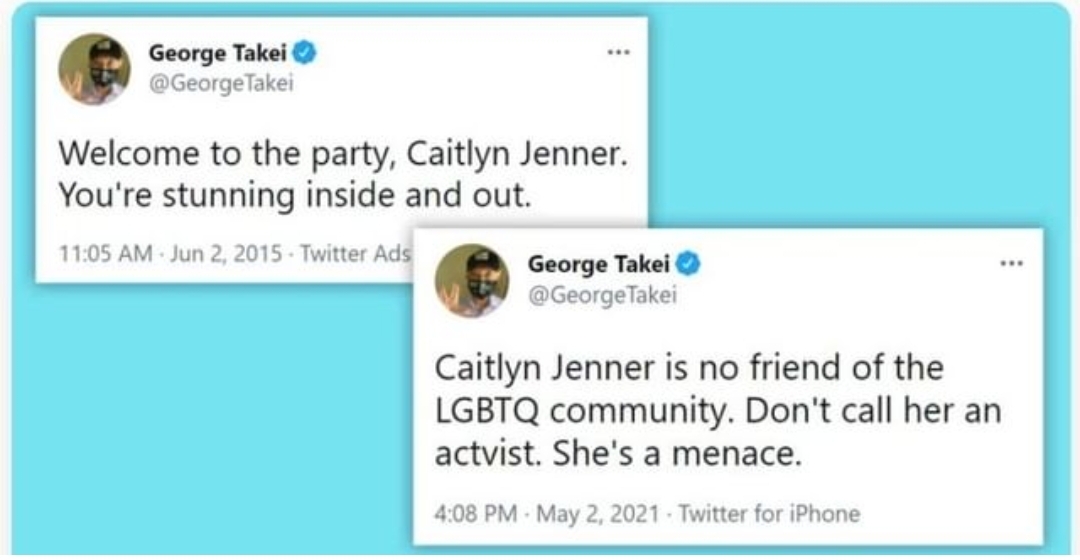
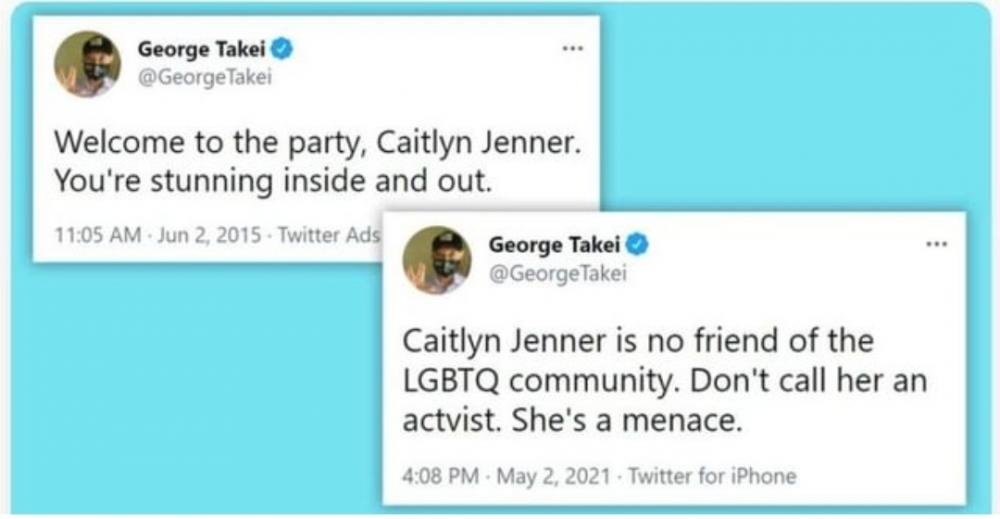
Now that Jenner is opposing Newsome for the governor of California...she's out of the LGBT club.
 1 point
 -
Do the -46 guys tell R model stories? Sent from my iPhone using Baseops Network mobile app1 point
-
The first amendment doesn't protect one from consequences. You're welcome to put anything you'd like on your Facebook page, but there's nothing saying you won't face consequences from doing so. I think the "government monitoring" ship sailed back with the passage of the Patriot Act (a misnomer if there ever was one). To me the real questions is why people type out their beliefs on social media anyway. Literally zero people care that someone is against kids in cages or that someone thinks the Covid vaccine is dangerous. Edited to add: the Venn diagram of people who propagate/believe the Big Lie and those who hold extremist views is nearly a circle, and they're rarely shy about showing it online, so that makes this an easier endeavor.-1 points
-
This is social media? I was reading and having discussions with others back on the studentpilot.net forums many years before Facebook was a thing. People interact on forums because of the exchange of ideas. Weird that you'd even be here commenting while not knowing what social media is.-1 points
-
Man, wait until you learn SECDEF, SECAF, and many other Air Force civilian leadership are are also political appointees...-1 points