Leaderboard
-
BashiChuni
Supreme User7Points2,666Posts -
B52gator
Supreme User5Points446Posts -
HuggyU2
Moderator4Points2,884Posts -
hindsight2020
Supreme User4Points1,059Posts



Popular Content
Showing content with the highest reputation on 03/29/2022 in all areas
-
4 pointsThat's the risk you run vacationing in Thailand. oh but for the grace of god go I.... 😄4 points
-
3 pointsFinal Top Gun trailer. Riding in a Tomcat and a Felon cameo at 2:03. My guess: Mav and baby Goose hijack a Tomcat and fly it out of Iran. Sent from my iPhone using Baseops Network mobile app3 points
-
3 pointsThanks to those at Vance and Columbus that came by to meet us. We even had one pilot that came in from another base a couple hours away to listen. Based on what I heard, there are still a lot of inaccurate beliefs about the U-2, so if someone tells you "you can't apply because of X", give us a call to verify that.3 points
-
2 points
-
2 pointsAnd "she" has a manicure. Article in Cosmo "How I shoot vile Russian invaders and never break a nail" Hopefully after noticing that detail I can still keep my man card.2 points
-
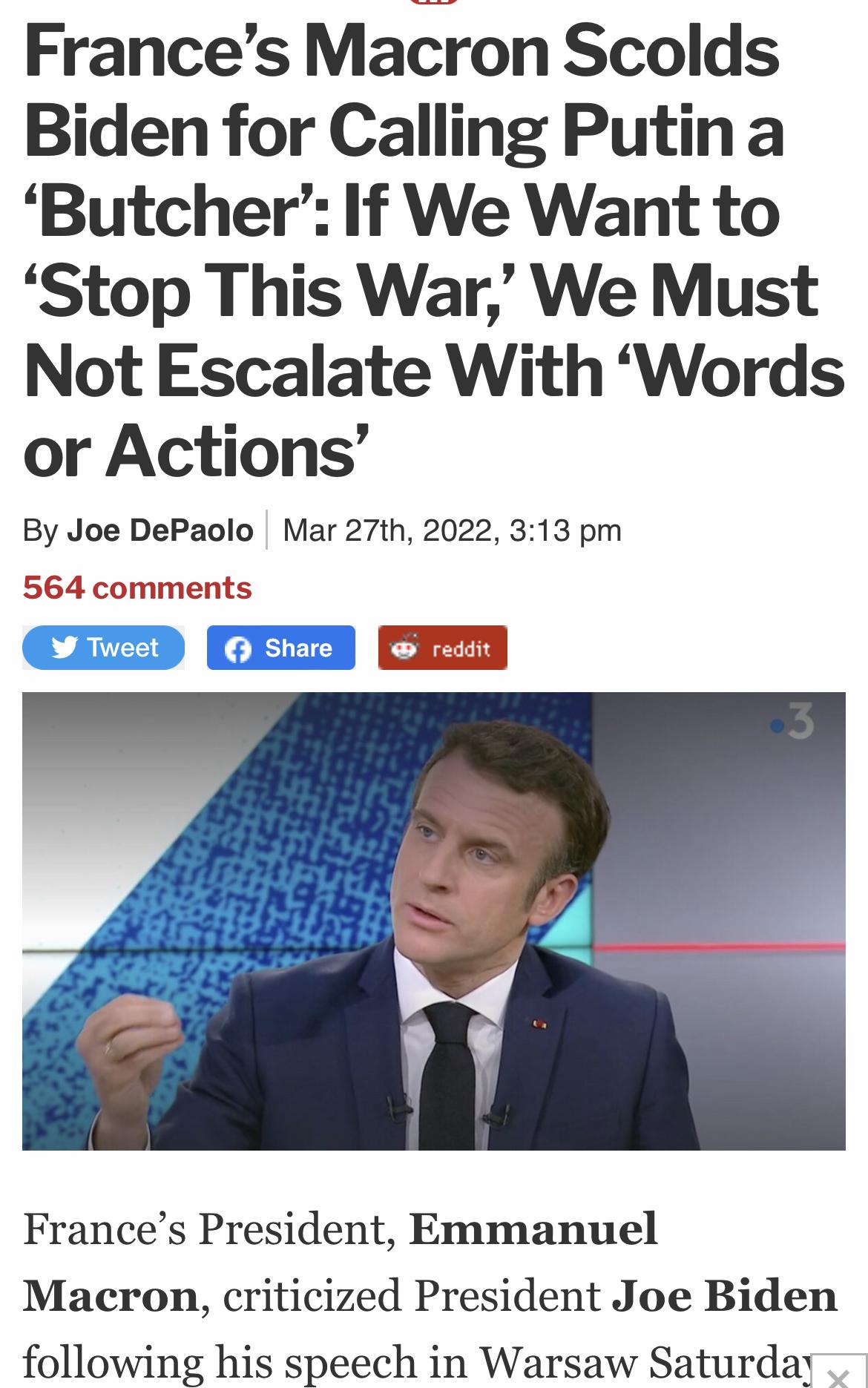
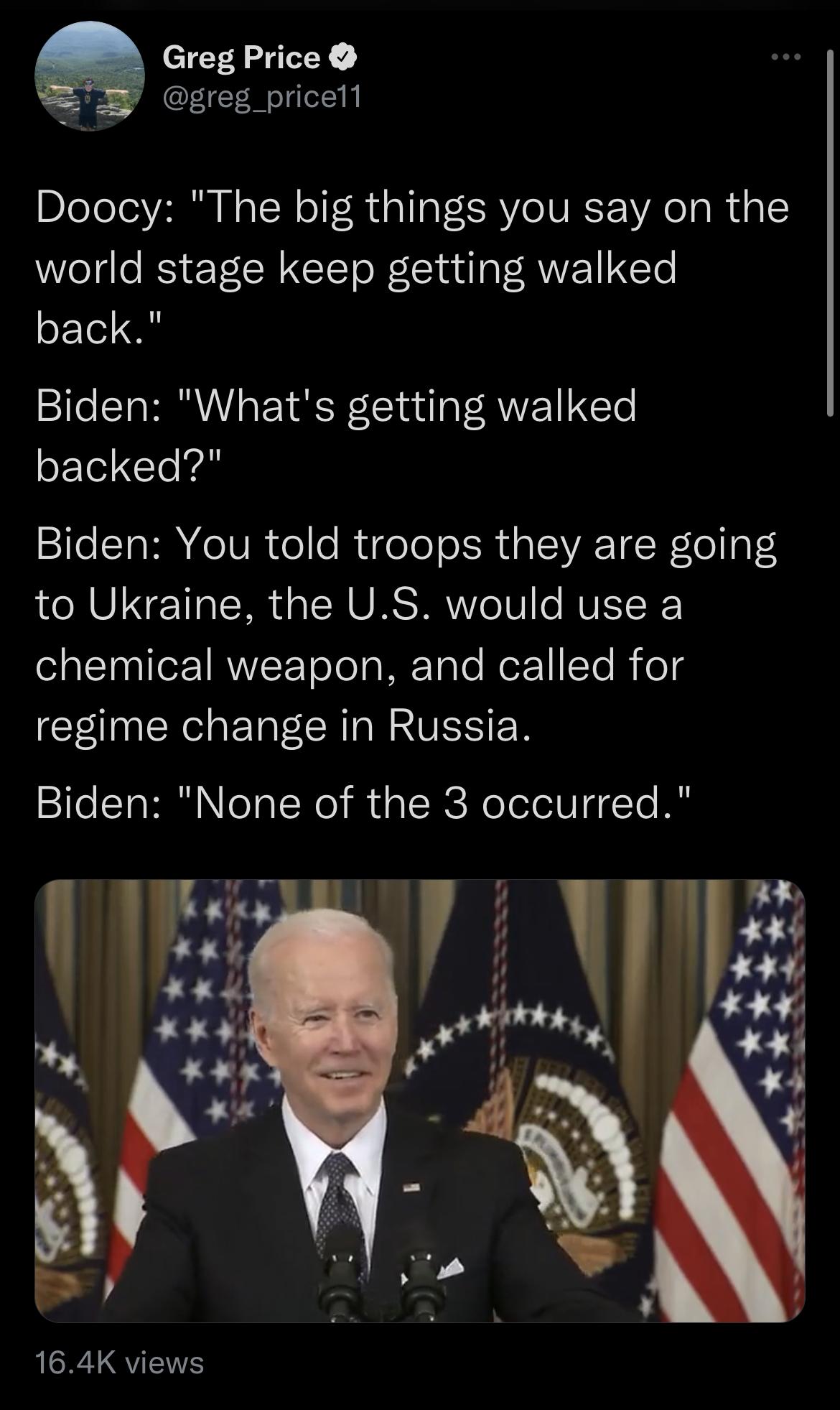
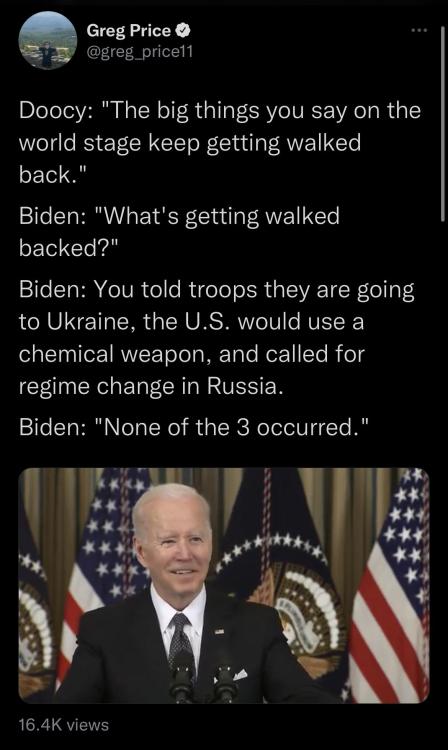
2 points2 points2 pointsYou guys keep calling it propaganda when they’re actually quotes the President said. Quotes. Not made up. Quoted on video.2 points2 points2 pointsFair enough, agree to disagree on your previous second point then. I do not believe that Putin was ever serious about negotiating and I believe the final decision to invade was made weeks, if not months before the actual invasion date. I don’t necessarily have a problem with Article 5 being nebulous; it gives us flexibility. I think anything that gives Putin doubt or makes him hesitate to escalate against NATO because he’s unsure of the response can be positive at times. If an armed Russian military aircraft violates Polish airspace then it should be intercepted and forced to turn back across the border or forced to land. If it doesn’t comply then the Poles should take whatever measures they deem to necessary defend themselves, including shooting it down. If Russia has a missile malfunction and hit Poland, they’d better apologize and demonstrate real quick measures on how they’ll avoid future fuck ups or NATO should be free to shoot down any missiles approaching a NATO border. If Russia jams all of Eastern Poland (very hypothetical) then that’s an act of war and the jammer locations should be targeted and destroyed if the Russians refuse to cease buzzer. Cyber attacks should be responded to in kind. If Russia detonates a nuclear warhead for the express purpose of EMP damage to a NATO country that’s an act of war and we should respond in kind. Russia isn’t “boxed in” by NATO. Russia enjoys large water bodies on its northern and eastern flanks. It has largely neutral or friendly states on its southern borders. NATO is not organizing to invade or attack Russia; Putin is using Russia’s history/fear of invasion as a cudgel/excuse to reestablish a greater Russian empire. Hitler, Napoleon, and Ghengis Khan are no longer in charge of their respective countries. If anything, this invasion is rapidly making Russia less secure due to Putin’s gross miscalculation. Generally I agree that talking is always preferable to fighting. But we and the Ukrainians have no obligations to listen to absurd demands just for the sake of listening. Putin was in the driver’s seat with regards to the invasion timeline, I don’t believe us stringing him along would’ve pushed D-Day to the right much, if at all.2 points1 pointCopy, wind mills have put this US into unrecoverable debt. Good thing we can keep drilling holes in the ground because we'll never run out of oil. I can't wait for somebody to invent a bottle of JD that never runs out too.1 point1 pointFrom what I've seen in the last 2 years of being on the circuit, ~12 months from hire to OTS is a reasonable expectation for non-priors. Why did it take ~10 months to be gained after finishing MEPS? Why did it take ~6 months to get an FC1 date after being gained? Maybe there were hiccups in your MEPS physical and/or getting an FC1 date. If so, I would understand why your timeline is longer than normal. But if not, I would ask the question, are you being to patient with your recruiter? Assuming you passed your FC1, at least you made it this far regardless of how long it took.1 point1 pointBefore the war we had Special Forces (Green Berets) there training Ukrainian's not to fight like Russians. If you believe all the talking heads in DC, they don't believe the Russians have yet begun to fight by not sending their best troops 7 dead Generals and a Col. ran over by his own troops later.1 point1 pointAh, understand now. edited to add: BTW, Haas in the points again, 2 for 2. So suck it Mazipin...1 point1 pointThe One China policy is an American product, borne from a time when we thought the natural order of things was the liberalization of mainland China. Since they are going backwards, why should we force ourselves to continue this policy? What’s to stop us from recognizing Taiwan as an independent country (should they decide that’s the direction they want to pursue) & establishing normal relations while encouraging other enlightened countries to do the same? Up to this point in history I would’ve said that scenario was just about impossible, as too many nations had major economic interests in China and would balk at the idea before it ever got any traction. But given recent events, my hope is that more of the world is willing to recognize and challenge the bad actors on the geopolitical stage. China is committing genocide on its Western frontier, has quashed democracy in Hong Kong (and ruined a once great world city), has been irresponsible (at best) with pathogens and unleashed a deadly plague on the entire world, routinely intimidates its neighbors and ignores their legitimate territorial claims, constantly commits industrial espionage/steals intellectual property, and overtly threatens Taiwan with war. They’ve also refused to denounce the Russian invasion and appear to have taken the Russian side in its conflict with Ukraine. If there were ever a time that the world could get behind Taiwanese independence, now is it. I would go so far as advocating for cementing our defense agreement with Taiwan in no uncertain terms and permanently placing US military assets in Taiwan & the straight. The American people have signaled they’re willing to make sacrifices in order to support freedom around the globe (another thing that makes this place uniquely special). I wonder if the CCP can equally afford to sacrifice its own economic interests in the name of Taiwanese reunification? My guess is absolutely not.1 point1 point1 pointhttps://www.prageru.com/video/how-much-energy-will-the-world-need?utm_source=Iterable&utm_medium=email&utm_campaign=campaign_3965824 Interesting summary of energy trends and cost. Bottom line, we've only moved 2% of energy usage away from fossil fuels to wind and solar (over the past 20 years) in spite of governments spending more than 5 Trillion on solar and wind technology and incentives.1 point1 pointReading through this old thread, Raytheon Technologies offers diff pay. So does Boeing I believe.1 point1 pointhttps://twitter.com/greg_price11/status/1508525310295351298?s=21&t=IJhwbxrBFTHBB-2d4oLuVA
 1 point1 pointDefinitely not an isolationist, more of a money baller. Looking for the biggest interests for the smallest investment. Your history on sovereignty is a bit off. Sovereignty came from the peace of Westphalia (hence its often called Westphalian sovereignty) and was one of many rules instituted by belligerents to protect larger states who were seen as more capable of governance. The other common rules were embracing standing armies, rules against political assassination, and the beggining concepts of balance of power. All of these conclusions were reach in Europe first but not by accident. Europe balkanized after the fall of Rome which caused it to develop hard political boundaries far earlier than the rest of the world. It's one of the reasons that makes discussing issues of historic sovereignty difficult with China. The eastern empires of China and India didn't really have hard boundaries. They just expanded into new territory until their power faded from its capital centers of gravity. So China did control some contested territories at some historical points in history but not in the same sense of control we think of. More so that those areas were just close enough to Chinese influence that it made accepting governance more beneficial for them. In all of the above mentioned rules (sovereignty, balance of power, no assassination, standing armies) there was an underlying theme to remove international power from smaller states and embody it in larger states. The whole idea of great powers and their satellites. It was believed that a few great powers could negotiate security more effectively that a conglomerate of states with straying interests. In any case, none of that is really important today. What is important is the recognition that sovereignty is relatively new in geopolitics, and like other political constructs, it will eventually fade to be replaced by something else. There is already emerging evidence to show that human networks that are transgeographic are beginning to erode sovereign power on global affairs. (Think anonymous) Now is that something that happens in our lifetime? Probably not. Is it something that happens in a few hundred years, probably. Personally, I see sovereignty for what it is. A temporary political construct that does the bare minimum to prevent descent from chaos but has little upholding it from being a hard and fast rule. Very few people on here are arguing to make the US a pariah state after violating Iraqs sovereignty over WMDs, a charter of war most of the world saw as an excuse to get oil. Also noone upheld sovereignty when we went into Syria to eliminate ISIS. And we certainly aren't offering to pay reparations for damages caused there. If I go back even further we can talk about Iran, Cuba, Guatamala, or the dozen other times we deliberately ignored sovereignty to meet state ends. So while it sounds all rainbows and unicorns to uphold this crusade to defend sovereignty I think it's a bit misguided because in reality we want to maintain the capability to "interpret sovereignty differently" when it meets our needs as well. Or so I presume.1 point1 pointok Taiwan wants to join the free world and completely cut off China. They want a seat at the UN and full, independent recognition from the West. Ready? In a perfect world i dont disagree with you, but the complexities of international politics don't fix so nicely into your idealistic box.1 point1 pointI wonder if some of you guys have ever been to places like Poland or Latvia or Georgia, or ever spoken with people from those places? I spent a fair amount of time in former Warsaw Pact countries as they were in the process of joining NATO. For them, NATO’s purpose has always been very clear. A decade or two free of the Soviets was not nearly enough time to convince them that the Russians had changed their ways. In fact, the former client states knew very well (vs much of “old” NATO) that the Russians would be a threat for generations to come. For them, NATO “expansion” was far from needless. It was absolutely necessary if they were to survive as independent and free nations. I always respected this position but admit that I just didn’t share quite the same anti-Russian zeal for a long time. Then Putin invaded and occupied parts of Georgia. Then he did the same in Crimea and eastern Ukraine. Now that he has outrightly invaded Ukraine, I can see that my Polish and Latvian friends were not exaggerating the threat at all. NATO’s purpose has never been more clear & the West bears ZERO responsibility for Russian aggression. If the Russians are truly concerned about Western expansion, it’s only because they know their system is broken and backwards and they cannot possibly offer their neighbors the same kinds of fruitful and healthy relationships that the West can.1 point1 pointI think Ukraine is showing the purpose of the growth. Countries should be allowed to self determine. If Ukraine had wanted to be Russia’s bestie like Belarus, more power to them. But they didn’t want that, and it’s not Putin’s decision to force them to align the way he wants.1 point1 pointHe is inept. That’s why they don’t let him take questions without a list of reporters to call on. He has shown zero competence. Just calling a spade a spade dude. Biden is in OBVIOUS cognitive decline and it’s scary he’s “in charge” Also very ironic the Democratic Party is screaming about politics and Russia…I’m old enough to remember when the left absolutely shredded mitt Romney during a Presidential debate when he said Russia was our biggest national security threat. So please…spare me your political “outrage”.1 point1 pointThey were happy with high gas prices, regardless of how it arrives…I doubt most of these progressives you mention are living paycheck to paycheck. I mean, why don’t these poor people just buy really expensive electric vehicles? https://www.huffpost.com/entry/why-high-gas-prices-are-a_b_6855142 https://www.npr.org/templates/story/story.php?storyId=53784871 point1 point1 point1 pointAttn Vance Pilots: We will be at Vance late tomorrow and will be doing a meet & greet at the 25 FTS. Should be around 1730... but check your emails. Students interested in learning about the U-2 are welcome too, and we are glad to have you show up.1 point0 pointsBecause you rarely argue in good faith, and I disagree with the notion that if only we tiptoe around Putins feelings long enough then surely he'll stop doing bad things. Plus its been 2 days now and still no escalatory rhetoric in response, seems like it wasn't that big of deal0 points