
Leaderboard




Popular Content
Showing content with the highest reputation on 09/11/2023 in all areas
-
4 pointsIt's not about deserving it. It's about creating the circumstances that make it easier to be victimized. I hope the chief of police puts this case on the back burner.4 points
-
3 pointsI dunno dude. I feel like when you advocate for policies that will inevitably lead to this happening to the people she represents, you most certainly do deserve it. In fact, I can't think of anyone who would be better placed at the top of that list. Poetic justice if you ask me. The ones who didn't deserve it were her kids. Who knows, maybe some of them will grow up to be cops and state prosecutors. Here's to hoping they do. Maybe that's how the cycle functions.3 points
-
3 pointshttps://www.foxnews.com/media/dem-party-chairwoman-once-called-defund-police-carjacked-assaulted-minneapolis Another “when a complete dumbass finally meets reality” moment. Not that she deserves what happened, but also I don’t feel bad for her at all. Stupid games = stupid prizes.3 points
-
2 pointsNM governor, another rich white liberal woman listening to the good idea fairy. Then the View a program of rich liberal women complaining about the influx of illegals in NYC then proclaiming how proud that NYC is a sanctuary city. Were doomed.2 points
-
2 pointsI think a closer analogy would have been someone ala Jeffrey Epstein's Ghislaine Maxwell - i.e. the lady who sold a bunch of young girls down the road into sex slavery. Yeah, no one deserves it, but if it had to happen to one person, I think we could agree that she'd be a fair candidate.2 points
-
Yeah, not going to be great for him. A few more interesting stats: Right now, for the first time ever, the cost of new homes is the same as existing homes. This is an artifact of the reality that existing homeowners (as a group) never *have to* sell, but homebuilders do. So the rate increases have killed off the existing home sales (too expensive for buyers, and most sellers can't/won't trade a 3% mortgage for a 7% mortgage), leaving new homes as the "best" option. Homebuilders are doing mortgage buydowns to incentivize sales without lowering prices. If they lower prices, that sets the new value for all remaining homes (even the localities would hate this, as it would depress property taxes. Everyone is aligned against the homebuyer). So they pay the bank you drop the mortgage rate, 5.5% seeming to be the magic number for a lot of buyers. If we operate on the reality that most homebuyers base their budget on the monthly payment, not the home price, then a drop from 7.5% to 5.5% has the same effect as dropping the price of the home by ~19%. How do you think the market would react if the narrative for the housing market had a 20% loss of value in one year nation wide? Investor buying is falling off a cliff. The average cap rate (profit) on renting these homes out is now a percent or so below the risk-free rate of treasuries. It's about equal with the 10-year note. So... run a portfolio of thousands of homes that require maintenance, management, and renters, with the risk of losing value if the market drops, or just buy US treasuries and sit on them? Easy math... Home prices in the last bubble didn't drop for about two years after the sales dried up. Housing moves slowly, but we have a huge percentage of investor-owned homes now, so the drop could be steeper with more owners capable of quick sales. And if things turn, he who panics first profits best. This doesn't have to happen, but the alternative is massive inflation to bring our wages up to levels that can normalize these prices. The US government will benefit massively from inflation because it will diminish the debt, but that assumes they survive the usually-associated social upheaval that follows large inflation.1 point
-
1 pointAnd they’ll get around to that right after they’re done with all that asset forfeiture (aka stealing from innocent Americans) they’re taking care of right now.1 point
-
I was trying to be nice I guess, kind of like a girl never deserves to get raped, but I still won’t ignore the fact she dressed like a prostitute and went to a frat party by herself while drunk.1 point
-
1 pointAnyone who inserts “gun” in front of violence, and/or says phrases like, “if it saves even one life…” is an unintelligent mouth breather. Zero thinking cells left (or maybe never existed to begin with) in those people. It’s unfortunate how many of those exist in our country.1 point
-
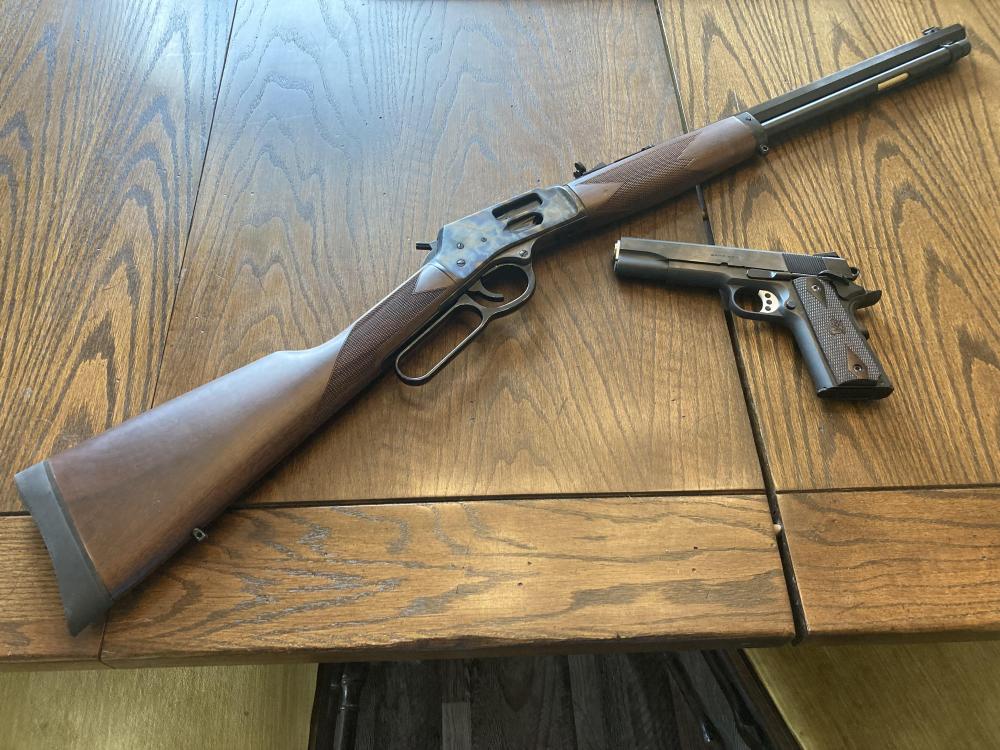
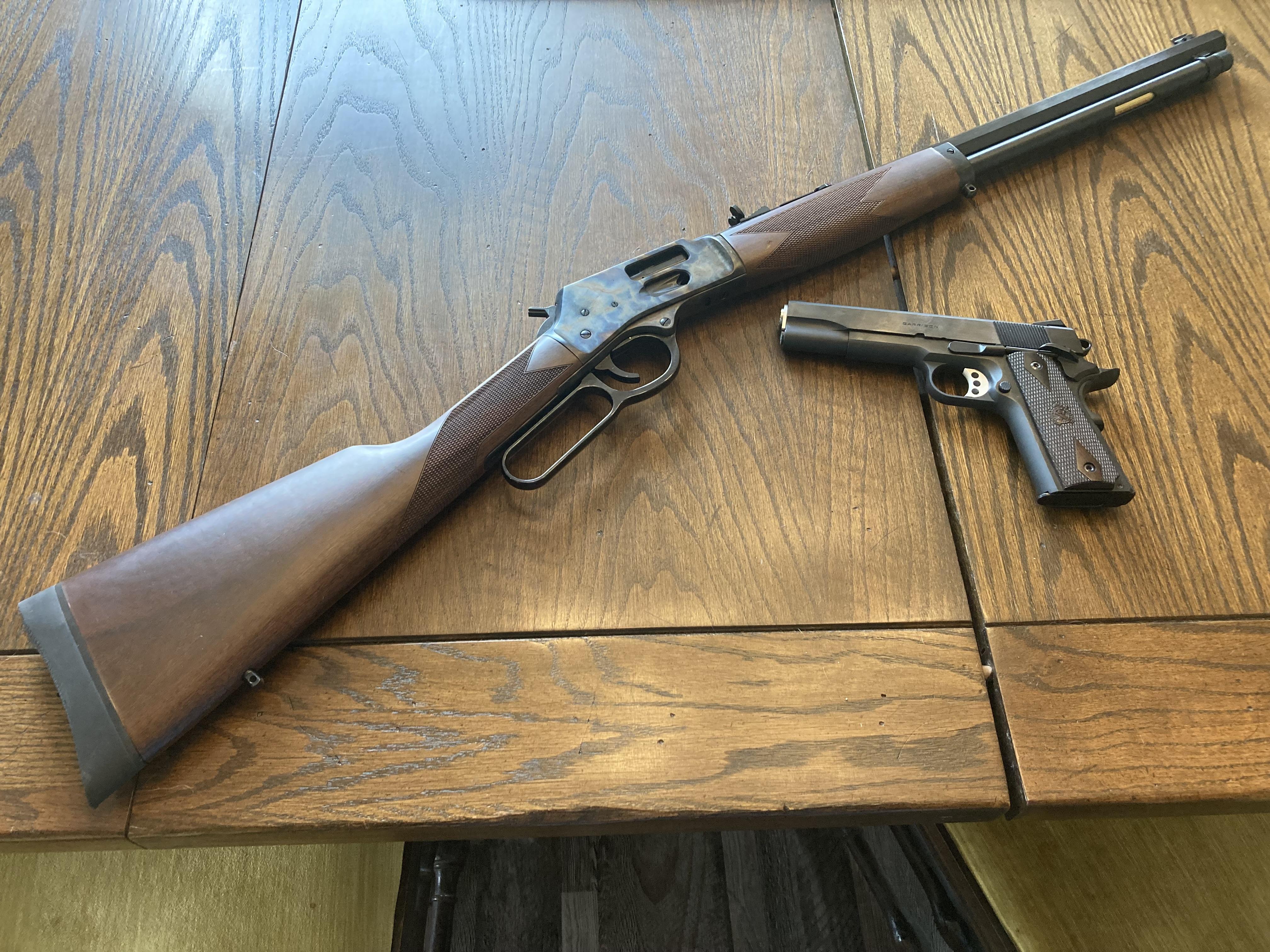
1 pointOn a positive note, I got bored yesterday and decided to celebrate the stupid new illegal NM gun restriction with a new purchase, Henry .357 Mag lever action and Springfield Garrison .45, Murica!
 1 point
 -
1 pointWinner. This is an acceptable answer. This dude flew helos. Answer: It’s mission specific. Roberta would probably say something about Apaches and Cobras lol and I’d laugh. Most US Military helicopters have been designed for the right seater to be the AC. Various missions/training sorties result in various seat positions. When I flew single pilot FCF flights in the Huey, I was required to fly in the right seat. All the important shit is on the Right seat collective and cyclic while the whole aircraft is designed around the right seater being in charge. The Huey didn’t have autopilot, so on an operational mission in the mountains I’d sit in the right seat as well. I didn’t want to fuck around in a hover trying to let the new guy get some experience with a dude dangling out of the aircraft. Doing escort missions, no hoist, I’d switch seats (not if the co was too new). Definitely on a training sortie I’d let the co sit in the right seat but in real life, if dude was too new and the flying environment was questionable, he’d be on the left. Sometimes we flew missions with a FE in the left seat. No copilot. Paves will differ as with USA, USN and USMC helos but for the most part, they follow something similar to this or what @Bigred described. Edit: If I was giving an evaluation to someone as badass as Roberta, I wouldn’t just ask her yes or no answers. I wanna know how she thinks (I learned shit doing this as an Evaluator while giving checkrides, sometimes the knowledge I gained was useful). This would never be a question I’d ask a real helicopter pilot/sma, but I’d definitely throw a softball like this to person who never stepped foot in a US helo but claimed they did time in one. Remember, Roberta flew Hueys, Pavelows and Pavehawks. She would know the answer. Lol Oh and she's a Viper driver as well. Lol1 point
-
1 point
-
1 pointOn the active-duty side there are enlisted Combat Camera photographers; when I was in Bahrain flying the MH-53E in 2021 we had an Air Force CC photographer that came out on det and got some great air to air and air to ground images. Additionally, the USAF flight test locations (Edwards and Eglin specifically) have full-time civilian flight test photographers that specialize in air to air documentary photo and video. To fly a ‘celebrity’ photog with no background in air to air photography is sort of a slap in the face to the professionals who work incredibly hard day in and day out to share the mission of the Air Force, at least in my humble opinion.1 point
-
There’s an extensive mental health evaluation.1 point
-
0 pointsKarma is a bitch named "Give me your car". Lol They are so out of touch its funny. Edit: Its only a big deal when shit gets real for them (the elite braindead leaders). My aunt (Army national guard soldier) was murdered while at a stop light on Dec 16, 1991 at approximately 2300 hours by three armed black men. I found out on my birthday, Dec 17, the following morning when I heard my mom screaming at around 3 am. My mom had to identify my aunt (my mom's baby sister), they used a high power rifle from three feet away. She had to identify my aunt by her hands. Every few years I read the transcript from court, so I can write the parole board to keep them locked up. The guys killed her for fun. Thats it. They pulled up next to her and shot her and drove off. The guy who pulled the trigger, was on Oprah a few years ago. She did an interview with him from prison. She was praising him for being a good prisoner but she (Oprah) never once mentioned my aunt.. or what that bastard did to her. The rich are out of fucking touch with the rest of us. Edit: This is a link. That's my Aunt Lucy in the article holding a picture of my Aunt Julia. https://www.montgomeryadvertiser.com/story/news/crime/2015/02/11/parole-denied-three-drive-shootings/23235961/ I left Alabama a few years after my Aunt's murder. Edit: Oh yeah, not one word about racism either. They targeted my aunt because she was white. Not one mention about this anywhere...ever. The President didn't give a speech, the rich Hollywood types and NBA and professional sports fags didn't say anything. She was in a parked car at a red light. She had just dropped off Christmas presents for my cousins and myself at my grandmother's house. Oh yeah, my grandfather (who flew in WWII, Korea and Vietnam) got to live through this event. He died a year later. Once again, fuck the rich and powerful and the gay horses they rode in on. If one if those pieces of shit ever gets out, they're gonna have a lot of nice guys waiting to give them a ride home. I'd definitely make one more trek back to the Heart of Dixie to visit them. I'll go to jail to make sure they never see freedom. Get some.0 points




-screenshot.thumb.jpg.3b12c3a4364b66eea25757a30532ba58.jpg)